Sarooj on Blogger!

Showing posts with label electronic health record (EHR). Show all posts

Friday, 8 February 2013

Meaningful Use with its Meaningful Results

Meaningful Use (MU) defines the use of certified Electronic health record (EHR) to improve quality care, reduce health disparities, and achieve better clinical outcomes within a healthcare organization. After the implementation of meaningful use, significant changes are done to transform a better healthcare system and following major changes will be seen:

    1.  Developed Quality, Safety, and Efficiency
    2.  Patient Commitment
    3.  Care Coordination between Clinics and Hospitals
    4.  Improved Public Health and Preventive Medicine
    5.  Complete Privacy and Security Protection

Physicians, after adopting electronic health records in a meaningful way, may have been awarded from the Centers for Medicare & Medicaid Services. More than 55,000 physicians received bonuses for meaningful use of EHRs in 2011 or 2012. Doctors or hospitals found ineligible for an EHR incentive after an audit would be asked to return the bonus payment.


Adoption of meaningful use program is now a fundamental requirement for the physicians, since two and half years is the rough time span left to implement Electronic Health Record (EHR) systems without facing any financial penalties. Practices should take serious notice on these deadlines and physicians need to focus all the essential elements necessary to meet the criteria of Meaningful Use (MU) bonuses.


For the ongoing success of EHR Incentive Programs, many billing companies have designed webinars and profound coaches that will walk physicians through solutions surrounding EHR issues and MU criteria. Each webinar with its training is interactive and featured. Identifying the key elements to achieve MU bonuses is the core objective. It will also provide an overview of related initiatives, incentives and penalties and how they will impact physician practices.

Sunday, 3 February 2013

Meaningful Use Stage II - What You Should Know?

The final rules of meaningful stage two are finally debuted. Providers and practices have another challenge of complying to these rules in order to earn meaningful use bonus. According to the final rules, 2014 is the earliest effective date for stage 2. All the menu measures of stage 1 except ‘Syndromic Surveillance’ are made core measures in stage 2. In addition to prescriptions, now the computerized physician order entry (CPOE) also includes radiology and lab orders.  

As said by Farzad Mostashari, MD, national coordinator for health IT, stage 2 will take time, “to make the most meaningful use of meaningful use.” The stage 2 also reinforces importance of a patient portal so that they can access to their medical records easily.


Now physicians have to make sure that at least 5% of their patients view, send and download their clinical information. Similarly, over 5% of the patients should communicate clinical information with doctors through secure email. After each visit, clinical information must be available to patients within 1 day. The five new menu measures added to stage 2 includes family history, imaging results, progress notes, reporting to cancer registries and reporting to specialized registries. 

Now the electronic health record (EHR) vendors have another benchmark to enhance the EHR. The best EHR will be one that will help providers in complying with meaningful use stage 2 rules.
Meaningful Use Stage 2

Tuesday, 1 January 2013

They Laughed When I Said I'd use EHR-- But When I Employ the LEVEL system in new Medical Practices, They Begged Me for My Secret!

A recent study by Pamela Lewis Dolan, revealed that a number of physicians have been doubled since 2008 who adopted electronic health records. Although EHR service is overwhelming, this source can be a reason of communication breakdown between patients and physicians. An internist and medical director of informatics at the Reliant Medical Group in Worcester, Larry Garber, MD, said that, “When physicians who are used to carrying paper charts start using tablets or desktop computers in the exam room, it’s going to be disruptive,”. This disruption “can absolutely make or break the relationship between doctor and patient,” he said.

Study said that numerous medical schools have realized the impact of bad communication affecting patient satisfaction and outcomes. Introduction of LEVEL system is a unique contribution to avoid unintended consequences based on bad communication.

Exam Room Setup: Many practices are implementing EHRs in spaces meant for paper-based practices said Glen Stream, MD, president of the American Academy of Family Physicians and chief medical information officer of the Rockwood Clinic. This undergoes with a new setup that has the physician’s back to the patient when he or she uses the computer, “which is absolutely the wrong message you want to send to the patients,” Dr. Stream said. Implementation of a basic triangle design that puts the physician, patient and computer screen at each of the three corners, allowing the doctor to look at both patient and computer screen without shifting his or her body is another method. In this way patients feel they are being looked at even when the physician is looking at the computer screen, Dr. Garber said.

Work-flow Design: Vincent WinklerPrins, MD, a family physician and associate professor of family medicine at Georgetown University School of Medicine in Washington said that computer terminal should never be the first place the physician goes when entering the room. The doctor should go to the patient first, greet him/her and establish an agenda for the visit. After that is done, the doctor should have some kind of transitional line explaining what he or she is about to do in the EHR, such as, “OK, let me jot down a few notes.”

Employ the LEVEL system: Designed by Kaiser Permanente to help physicians use an EHR in the exam room, LEVEL stands for:

L: Let the patient look on. This goes back to the triangle setup that allows the physician to easily share things on the computer screen with patients.

E: Eye contact. Dr. Garber treats every patient encounter as he would have a conversation with a friend or family member.

V: Value the computer. If the physician praises the benefits of the computer, the patient will appreciate its presence. Using such statements like “With my EHR, I can look that up” or “I can send your prescription straight to the pharmacy,” will help patients think their care is more advanced because of the computer, Dr. Garber said. Sharing visuals on the screen, such as a chart mapping historical cholesterol levels and positive framing by Dr. Stream are beneficial for the patients.

E: Explain what you’re doing. Dr. Braddock said it’s important for doctors to be transparent about everything they do. Share everything and be very clear with their work, in addition easy statements will make patients more comfortable.

L: Log off. Logging off in front of the patients, in the exam room makes them confident that the next patient won’t walk in with their information still on the screen, Dr. Garber said.

Dr. Braddock said that medical practices should look to one another for tips and guidance on how to handle this training and in this same regard, Reliant Medical Group adopted the LEVEL system from Kaiser. A YouTube video created by Dr. Garber explains the LEVEL process with “good doctor” and “bad doctor” examples. Communication is a foremost thing to bring a revolutionary change.  It reduces the uncertainty in opinions and practices. Dr. WinklerPrins said that every physician has to deal with how to work with an EHR in the exam room, and EHRs are here to stay, so every practice has to figure out how to work with them effectively. 

In this new era of Online Healthcare, majority doctors and consumers prefer Practice Management

Practice management software is wisely preferred, since it is convenient, cost effective and gainful. Due to its usefulness, it is highly preferred by the doctors and patients. Using this software, it not only covers a phenomenal flow in the procedural work, but also helps the doctors to take financial decisions. 

A recent survey by Katharina Scharruhn concluded that, “treating medical practice management as a business involves the following: the front end, which is about making the money, and the back end, which is about keeping the money.”

Practice management solution helps us to gain our patients’ satisfaction with integrated workflows and accelerating revenue cycle. Access any billing information from any Internet-ready computer and a number of mobile platforms. This research continues with the agreement that U.S. health citizens are part of practice management solution to deal with their day-to-day operations. Not wrong to say that it’s a multi-pronged strategy to low down the cost curve in American health care!


Practice Management Software

Technological Era hits the Medical and Billing Company by introducing Web-Based Electronic Health Records (EHRs)

One of the magnificent changes in the medical and billing company would be Electronic Health Record (EHR) invention. EHR is internationally recognized and well considered by many physicians and healthcare providers across USA.

Electronic Health Record is a unique solution to patients’ problems, medications, their medical history and other related reports. Web-Based EHR is easily accessible from anywhere, any computer or mobile device, like iPhone, iPad and latest mobile phones, where there is no hardware required as well.

Its users can easily access the complete information with enhanced technology and protected safety measurements. Web-Based EHR can be a defined sensation for many physicians, since there are no restrictions and limitations on the number of patients, users or medical records. These are certain advantages which stimulate majority doctors’ workflow and they also recommend Web-Based EHRs.

It won’t be wrong to say that Web-Based EHR is a big evolution in medical and billing services. Gain the benefit of accessing Web based EHR fully online with complete safety and medical solutions.

Friday, 21 December 2012

New Platforms in Healthcare Technology

Health information technology is not less than a boom in the field of healthcare. Health technology significantly improves the quality of healthcare, increases patient satisfaction and safety, reduces number of medical errors, and also fortifies the interaction between patients and healthcare providers. In a 2010 survey titled Technology, medical tests 'changing the face of health care', Amy Bernstein, the report's lead author, a health scientist for the National Center for Health Statistics said that, “Technologies can be very helpful, there are newer and better technologies all the time, and they're changing the face of health care and practice patterns". To markup the value of E-Care Management, health information technology plays a vital role in improving healthcare delivery in America.

This aid has a repertoire of offerings to help patients and doctors to critically analyze more in the field of medicine. However, with the rapid increase in usage of Electronic Medical Records (EMRs), the creation of Accountable Care Organizations (ACOs), and the rise of health information exchanges, the delivery of medical care became more trouble-free, study said. The following technologies are also considered to be a part of health technology, study said:
  1. Drugs: e.g., antibiotics, ACE inhibitors, aspirin, beta-blockers, antibiotics,
  2. Biologics: gene therapies, antibodies
  3. Devices: e.g., pacemakers, CT scanners
  4. Diagnostic tests: e.g. DNA fecal test for colorectal cancer, genome sequencing
  5. Medical and surgical procedures: e.g., psychotherapy, coronary angiography
  6. Support systems: e.g., electronic patient record systems, telemedicine systems,
  7. Organizational and managerial systems: e.g., cholesterol management program, billing and accounting.
All above stated paradigms are unique contribution in healthcare IT, since they can easily:
  • Prevent
  • Screen
  • Diagnose
  • Treat
  • Rehabilitate 
  • Assist to reduce errors
This is not the end, there's still room for improvement, says Lloyd Michener, director of the Duke Center for Community Research. "It's a call for accelerated efforts that will build partnerships between academic medical centers and public health groups in order to address some of our persistent health issues”, stated in a survey. More progress in medical technologies will endeavor better healthcare delivery with improved life expectancy and quality of life.

Web-based Healthcare solutions’ built for your practice

Recent web-based healthcare solutions’ are exclusively built for development, conversion ongoing support of healthcare information systems with a continuum of care. Millions of doctors and physicians profoundly admire advanced healthcare solutions, which has driven success in their businesses.

Web based solutions are available anytime from any corner of the world since these modules are computerized and connected with internet. This is a useful technique to overcome hectic lifestyle of doctors and patients. It improves medical outcomes with limited access of time. Now they can embrace a broad spectrum of medical applications very easily. Majority states believe that the general estimate of telehealth services in U.S. and Europe will grow from $3 billion in 2009 to nearly $8 billion by 2012.

With Healthcare Solutions you will gain:
  1.  A completely Integrated, web-based solution
  2. Confirmed and validated feedback
  3.  An intuitive, user-friendly interface
  4. An advanced database with multidisciplinary operations
  5. Expert support services with relevant information

Thursday, 20 December 2012

Web Electronic Health Record: A Disruptive Technology

A disruptive technology is one that displaces an existing technology by adding more value. EHR is one of the major healthcare disruptive technologies. When EHR came, it replaced all the existing mini healthcare software and provided users with a full-fledge software having numerous functionalities. EHR introduced automation and connectivity in healthcare industry that resulted in efficiency and improved patient care.

Now there comes another disruptive technology in the form of web EHR that will ultimately replace the desktop EHR. Web EHR is the latest innovation and is provided only by few vendors. Web EHR has solved many issues of the desktop EHR. It ensured 24/7 availability. Being web based, it does not require installations and maintenance.  It is also quiet cost effective as it does not require any special hardware or software. With this much value, web EHR is expected to replace desktop EHR. This will bless the healthcare industry with more positive outcomes. 

Desktop EHR & its Applications

Internet simplifies a Doctor-Patient Relationship

Information technology era has come up with many dynamic changes. It effectively settles the doctor-patient relationship too. Users generally prefer Internet to seek online health information instead of asking friends and going through reference books, offline sources or even health news reports. Internet is one of the primary concerns that provide all the information about health and related issues. Majority patients go with online searches to handle their medical problems not because they mistrust their doctors, as now they believe that personal control over their illness can be figured out very easily.

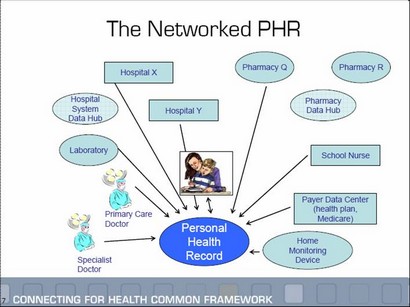
Patients will never suffer from any problem, while setting their medical appointments with the doctors. Personal Health records (PHR) is one of the unique contributions that provides patients an online access to get their past and current health information directly from their doctor’s website. With PHR, patients get information about their personal assessments, medications, general allergies, immunizations and procedures too.

PHR is completely free and reliable. Patients can get their personal online portal from which they can record, track and even save their important health related information at one secure online place. With the improved workflow and efficiency of a practice, free technical support is also provided where needed. Patients can easily manage their personal health records like demographic information, appointment history, health records, lab tested results, payment reports, outstanding balances and claim history, available 24/7 from any Internet-ready computer. Level of trust between a doctor and a patient gets more compact since online information-seeking is higher among the patients who get all the information from Internet.

Doctors play a dynamic role in supporting online health challenges. They need to be attentive and alert to provide the same degree of reassurance, their patients expects from them. Direct communication through the patient-doctor communication module and viewing direct comments from the personal providers strengthen a Doctor-patient relationship. Moreover, majority patients feel much comfortable to get any sort of online information from their doctors. This has also developed trust and confidence among the patients, who prefer online health solutions.

PHR allows online scheduling, from which patients can simply schedule their own appointments directly through the practice’s website. An ideal PHR holds an incredible ability, since it can easily get and assess the information from a patient's lab results or monitoring devices; store a patient's remarks about the physical and social environment and link with a doctor’s electronic health record (EHR). PHRs can also make health care more reasonable by urging avoidance and wellness, and by reforming better care delivery.
Personal Health Record (PHR)